
Author: Scott Walter

  • Ephesians 3

    Ephesians 3

    Read Ephesians 3

    God’s Marvelous Plan for the Gentiles

    For this reason I, Paul, the prisoner of Christ Jesus for the sake of you Gentiles—

    Surely you have heard about the administration of God’s grace that was given to me for you, that is, the mystery made known to me by revelation, as I have already written briefly. In reading this, then, you will be able to understand my insight into the mystery of Christ, which was not made known to people in other generations as it has now been revealed by the Spirit to God’s holy apostles and prophets. This mystery is that through the gospel the Gentiles are heirs together with Israel, members together of one body, and sharers together in the promise in Christ Jesus.

    I became a servant of this gospel by the gift of God’s grace given me through the working of his power. Although I am less than the least of all the Lord’s people, this grace was given me: to preach to the Gentiles the boundless riches of Christ, and to make plain to everyone the administration of this mystery, which for ages past was kept hidden in God, who created all things. 10 His intent was that now, through the church, the manifold wisdom of God should be made known to the rulers and authorities in the heavenly realms, 11 according to his eternal purpose that he accomplished in Christ Jesus our Lord. 12 In him and through faith in him we may approach God with freedom and confidence. 13 I ask you, therefore, not to be discouraged because of my sufferings for you, which are your glory.

    A Prayer for the Ephesians

    14 For this reason I kneel before the Father, 15 from whom every family in heaven and on earth derives its name. 16 I pray that out of his glorious riches he may strengthen you with power through his Spirit in your inner being, 17 so that Christ may dwell in your hearts through faith. And I pray that you, being rooted and established in love, 18 may have power, together with all the Lord’s holy people, to grasp how wide and long and high and deep is the love of Christ, 19 and to know this love that surpasses knowledge—that you may be filled to the measure of all the fullness of God.

    20 Now to him who is able to do immeasurably more than all we ask or imagine, according to his power that is at work within us, 21 to him be glory in the church and in Christ Jesus throughout all generations, for ever and ever! Amen.

    Go Deeper

    In verses 1-6, Paul explains the purpose of his writings to the church in Ephesus. He is writing this letter to help explain the mystery that was made known to him through revelation in hopes that readers/hearers can more wholly understand the mystery of Christ. This “mystery” that is being revealed is that all are welcome in the body of Christ. We are no longer separated as Jew or Gentile but as sinners saved by immeasurable grace through Jesus Christ.

    We see this applied today. We are all uniquely created, but our identity is in Christ and Christ alone. We do not find our identity in anything else but the saving grace of Jesus Christ.

    The second portion of this text (verses 7-13) fully embodies humble service to which we are all called. Since we all now are identified under the saving grace of Jesus, we all are called to the same mission to tell the world of this magnificent mystery of grace. However, this should not allow us to become arrogant or prideful in our own words or actions. We are sinners saved by grace. God is the star of our message, not us. We see this humble service displayed by Paul when he refers to himself as “the very least of all the saints” to whom grace was given. It is not about Paul. It is not about us. It is about Jesus. Always. When we have a correct perspective of our previous sinful state and our newly found resurrected state, we can live out our “eternal purpose that is realized in Christ Jesus our Lord.” Now, we can have boldness, confidence, and full access to the source of all strength and wisdom as we proclaim the goodness of God to a world that needs it.

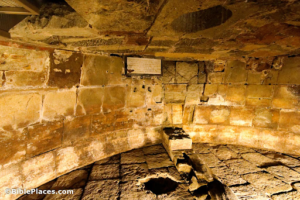
    Verses 14-21 display the final concept shared in this chapter of Scripture: God is more capable than we could ever even hope to imagine. Take a moment to think about where Paul is writing this note. The picture below shows what his cell probably looked like. Even in these harsh conditions that none of us could ever dream of experiencing, Paul trusted God to do “more abundantly than all that we ask or think, according to the power at work within us.” Sometimes verses 20-21 can be taken out of context to say God is going to give us immeasurably more wealth, fame, promotions, family, etc. That is not what these verses are saying.

    Take a look back at 14-19 and you can see what Paul is asking for. He is asking that all know Jesus and would be filled with His strength and power through the Holy Spirit to understand the depths of Christ’s love and then share it with the world. It goes back to our mission that was laid out for us in verses 7-13.

    God wants to do immeasurably more through you for His kingdom, not for your earthly kingdom that will vanish like a vapor one day. He wants to use you right now where you are. Sometimes this may mean earthly riches and fame may come. There is no problem with that. However, if we look at Paul, we see that when God does immeasurably more through us here on earth, we may just end up facing earthly suffering and never taste riches or fame until we are with Jesus in heaven. God wants to use you. All are welcome. We all have a part to play through humility. God is more capable than we could ever even hope to imagine.

    Questions

    1. Is there anything you are identifying with that you place on a higher pedestal than being identified with Christ? Are you willing to change that?
    2. What part can you play in sharing the love and goodness of God boldly like Paul today?
    3. Are you honestly willing to forsake earthly comforts for the sole purpose of proclaiming Christ to a world that needs Him?

    Did You Know?

    Below, courtesy of BiblePlaces.com, is an example of what Paul’s cell likely would have looked like. He wrote four “prison epistles” while in Rome: Ephesians, Phillippians, Colossians, and Philemon! 
    Leave a Comment Below

    Did you learn something today? Share it with our Bible Reading Plan community by commenting below.

    Join the Team

    Interested in writing for the Bible Reading Plan? Email [email protected].

  • Ephesians 2

    Ephesians 2

    Read Ephesians 2

    Made Alive in Christ

    As for you, you were dead in your transgressions and sins, in which you used to live when you followed the ways of this world and of the ruler of the kingdom of the air, the spirit who is now at work in those who are disobedient. All of us also lived among them at one time, gratifying the cravings of our flesh and following its desires and thoughts. Like the rest, we were by nature deserving of wrath. But because of his great love for us, God, who is rich in mercy, made us alive with Christ even when we were dead in transgressions—it is by grace you have been saved. And God raised us up with Christ and seated us with him in the heavenly realms in Christ Jesus, in order that in the coming ages he might show the incomparable riches of his grace, expressed in his kindness to us in Christ Jesus. For it is by grace you have been saved, through faith—and this is not from yourselves, it is the gift of God— not by works, so that no one can boast. 10 For we are God’s handiwork, created in Christ Jesus to do good works, which God prepared in advance for us to do.

    Jew and Gentile Reconciled Through Christ

    11 Therefore, remember that formerly you who are Gentiles by birth and called “uncircumcised” by those who call themselves “the circumcision” (which is done in the body by human hands)— 12 remember that at that time you were separate from Christ, excluded from citizenship in Israel and foreigners to the covenants of the promise, without hope and without God in the world. 13 But now in Christ Jesus you who once were far away have been brought near by the blood of Christ.

    14 For he himself is our peace, who has made the two groups one and has destroyed the barrier, the dividing wall of hostility, 15 by setting aside in his flesh the law with its commands and regulations. His purpose was to create in himself one new humanity out of the two, thus making peace, 16 and in one body to reconcile both of them to God through the cross, by which he put to death their hostility. 17 He came and preached peace to you who were far away and peace to those who were near. 18 For through him we both have access to the Father by one Spirit.

    19 Consequently, you are no longer foreigners and strangers, but fellow citizens with God’s people and also members of his household, 20 built on the foundation of the apostles and prophets, with Christ Jesus himself as the chief cornerstone. 21 In him the whole building is joined together and rises to become a holy temple in the Lord. 22 And in him you too are being built together to become a dwelling in which God lives by his Spirit.

    Go Deeper

    In today’s reading, Paul wastes no time before getting to some incredibly important theological truths for the people of Ephesus (and us) to hear. If you only half-read or skimmed this chapter–stop. Go back and re-read because what Paul is laying out here is something you don’t want to miss. Today, we are going to explore each truth that Paul is telling us, comparing them to verses from his letter to the Romans. Take a look at the chart below:

    Ephesians 2

    Romans

    Verses 1-2: Paul lays out clearly how dead and deprived we were when we lived by the flesh and sinned however we wanted. 

    Romans 3:23

    Verse 3: Paul says that because of how we lived, we deserved God’s wrath and judgment. 

    Romans 6:23

    Verses 4-5: God in his great love and mercy made us alive through Christ, and v. 6-7 describe how God sent his Son to die and be brought up to heaven. 

    Romans 5:8

    Verses 8-9: These two verses are arguably the most important in the chapter. We are saved by grace through faith. Salvation isn’t based on what we do; it’s entirely dependent on our faith in Jesus and our belief that he died, took on all our sins, and came back to life three days later. 

    Romans 10:9

    How revolutionary are these truths to the common “religious” way of thinking? These verses make it clear that there is nothing we can do, say, or think, to earn our way to heaven. We don’t deserve it. But Jesus provides a way for all of us to be saved and live eternally with Him. Romans 8:1 says this: “Therefore, there is now no condemnation for those who are in Christ Jesus.” We are in Christ Jesus, so we are saved, pure, free from death and sin and shame and hiding.

    So, now what? Now that we understand God’s saving grace and the message of the Gospel, what do we do? Verse 10 of today’s chapter says that we are God’s handiwork, created to do good works that He has prepared. We can devote our lives to showing others this truth. As the second portion of this chapter describes, we can seek oneness with all of God’s people, and be on mission with them to change lives.

    Questions

    1. If you were to die today, how sure are you that you would go to heaven? Give a number from 1 to 10 and explain why.
    2. If you were standing before God and he asked you why he should let you into heaven, what would you say?
    3. When was the last time you shared the Gospel? This question isn’t meant as a guilt trip; it’s a call to action. If you haven’t been reaching the lost, it is never too late to start.

    Keep Digging

    Interested in sharing the Gospel, but not quite sure how to do it? The Romans verses above are a part of the Romans Road, a very common and simple way to lay out the revolutionary truth of the gospel. A summary of it can be found here. Additionally, if you are unsure how to begin a Gospel-centered conversation, asking the first two of today’s reflection questions are a great way to do so.

    Leave a Comment Below

    Did you learn something today? Share it with our Bible Reading Plan community by commenting below.

    Join the Team

    Interested in writing for the Bible Reading Plan? Email [email protected].

  • Judges 21

    Judges 21

    Editor’s Note

    Typically Sunday is a rest day, but for Holy Week we are going to try something different. Each day (from Palm Sunday to Easter Sunday) we are going sync up the reading with what Jesus did that particular day. Our hope is that by following along each day, we’re able to get a more full picture of the week that changed the world forever. Thanks for journeying alongside us through Judges. Come back tomorrow to experience Holy Week with us!

    The BRP Team 

    Read Judges 21

    Wives for the Benjamites

    21 The men of Israel had taken an oath at Mizpah: “Not one of us will give his daughter in marriage to a Benjamite.”

    The people went to Bethel, where they sat before God until evening, raising their voices and weeping bitterly. Lord, God of Israel,” they cried, “why has this happened to Israel? Why should one tribe be missing from Israel today?”

    Early the next day the people built an altar and presented burnt offerings and fellowship offerings.

    Then the Israelites asked, “Who from all the tribes of Israel has failed to assemble before the Lord?” For they had taken a solemn oath that anyone who failed to assemble before the Lord at Mizpah was to be put to death.

    Now the Israelites grieved for the tribe of Benjamin, their fellow Israelites. “Today one tribe is cut off from Israel,” they said. “How can we provide wives for those who are left, since we have taken an oath by the Lord not to give them any of our daughters in marriage?” Then they asked, “Which one of the tribes of Israel failed to assemble before the Lord at Mizpah?” They discovered that no one from Jabesh Gilead had come to the camp for the assembly. For when they counted the people, they found that none of the people of Jabesh Gilead were there.

    10 So the assembly sent twelve thousand fighting men with instructions to go to Jabesh Gilead and put to the sword those living there, including the women and children. 11 “This is what you are to do,” they said. “Kill every male and every woman who is not a virgin.” 12 They found among the people living in Jabesh Gilead four hundred young women who had never slept with a man, and they took them to the camp at Shiloh in Canaan.

    13 Then the whole assembly sent an offer of peace to the Benjamites at the rock of Rimmon. 14 So the Benjamites returned at that time and were given the women of Jabesh Gilead who had been spared. But there were not enough for all of them.

    15 The people grieved for Benjamin, because the Lord had made a gap in the tribes of Israel. 16 And the elders of the assembly said, “With the women of Benjamin destroyed, how shall we provide wives for the men who are left? 17 The Benjamite survivors must have heirs,” they said, “so that a tribe of Israel will not be wiped out. 18 We can’t give them our daughters as wives, since we Israelites have taken this oath: ‘Cursed be anyone who gives a wife to a Benjamite.’ 19 But look, there is the annual festival of the Lord in Shiloh, which lies north of Bethel, east of the road that goes from Bethel to Shechem, and south of Lebonah.”

    20 So they instructed the Benjamites, saying, “Go and hide in the vineyards 21 and watch. When the young women of Shiloh come out to join in the dancing, rush from the vineyards and each of you seize one of them to be your wife. Then return to the land of Benjamin. 22 When their fathers or brothers complain to us, we will say to them, ‘Do us the favor of helping them, because we did not get wives for them during the war. You will not be guilty of breaking your oath because you did not give your daughters to them.’”

    23 So that is what the Benjamites did. While the young women were dancing, each man caught one and carried her off to be his wife. Then they returned to their inheritance and rebuilt the towns and settled in them.

    24 At that time the Israelites left that place and went home to their tribes and clans, each to his own inheritance.

    25 In those days Israel had no king; everyone did as they saw fit.

    Go Deeper

    In 1987, the SMU football program received “the death penalty” from the NCAA for making payments to players in violation of regulations. The punishment banned the program from competition for one year, but had the unintended effect of leaving the program in ruin for decades. The outcome was so devastating that the NCAA has never used it for a football program again.

    In Judges 21, we see the devastating outcome of Israel’s version of “the death penalty” for the Benjamites and their devious efforts to resolve it. In previous chapters, we learned of the Benjamites’ abhorrent behavior, their refusal to repent, and the determination of Israel’s other tribes to hold the Benjamites accountable. At the beginning of Judges 21, we learn the rest of Israel issued their version of “the death penalty” by vowing to prevent their daughters from marrying the Benjamites. Israel now realized this punishment would have the unintended effect of leaving the tribe of Benjamin, a fellow Israelite tribe, in ruin.

    Rather than admitting their own error and asking guidance from God, the Israelites followed one bad decision with another (and another). Attempting to solve their own situation, they are determined to capture the unmarried women of an Israelite city, give the women to the surviving Benjamites, and kill everyone else in the city. But, they failed to do the math first and found they needed more women! For the remaining men without a wife, the Israelites instructed the Benjamites to steal women from an Israelite festival. Because the women were stolen, their Israelite leaders could claim they had not broken their oath.

    We may criticize the Israelites’ rash decisions and problematic punishments, but Judges 21 urges us to consider the unintended effects of solving our own situations. Verse 25 sums up the root cause of the problem, then and now: “In those days Israel had no king; everyone did as they saw fit.”

    Israel had no king. They had no guiding authority to think through long-term effects, no leader to cast a vision of a better way, and no protector to provide provision for difficult days. Without a king, Israel wavered and wondered and fell wayward. We, too, wallow in the waste of our will when seeking our own solutions. But we have a king! We have King Jesus. Jesus knows the past, present, and future, so He guides with eternal wisdom. Jesus cast a vision of walking through this world in love and then took each step on this earth to show us the way. Jesus made a way for the Spirit to provide for us in difficult days. Without King Jesus, everyone does as they see fit and we follow the path of destruction seen in Judges 21. With King Jesus, we have abundant life (John 10:10).

    Questions

    1. What is a current situation you are trying to solve yourself? 
    2. How is that working out?
    3. In what ways can you allow Jesus and the Spirit to rule over this situation?

    Listen Here

    Listen to this podcast from The Bible Project to learn more about what it means for Jesus to be King of our lives.

    Leave a Comment Below

    Did you learn something today? Share it with our Bible Reading Plan community by commenting below.

    Join the Team

    Interested in writing for the Bible Reading Plan? Email [email protected].

  • Judges 19

    Judges 19

    Read Judges 19

    A Levite and His Concubine

    19 In those days Israel had no king.

    Now a Levite who lived in a remote area in the hill country of Ephraim took a concubine from Bethlehem in Judah. But she was unfaithful to him. She left him and went back to her parents’ home in Bethlehem, Judah. After she had been there four months, her husband went to her to persuade her to return. He had with him his servant and two donkeys. She took him into her parents’ home, and when her father saw him, he gladly welcomed him. His father-in-law, the woman’s father, prevailed on him to stay; so he remained with him three days, eating and drinking, and sleeping there.

    On the fourth day they got up early and he prepared to leave, but the woman’s father said to his son-in-law, “Refresh yourself with something to eat; then you can go.” So the two of them sat down to eat and drink together. Afterward the woman’s father said, “Please stay tonight and enjoy yourself.” And when the man got up to go, his father-in-law persuaded him, so he stayed there that night. On the morning of the fifth day, when he rose to go, the woman’s father said, “Refresh yourself. Wait till afternoon!” So the two of them ate together.

    Then when the man, with his concubine and his servant, got up to leave, his father-in-law, the woman’s father, said, “Now look, it’s almost evening. Spend the night here; the day is nearly over. Stay and enjoy yourself. Early tomorrow morning you can get up and be on your way home.” 10 But, unwilling to stay another night, the man left and went toward Jebus (that is, Jerusalem), with his two saddled donkeys and his concubine.

    11 When they were near Jebus and the day was almost gone, the servant said to his master, “Come, let’s stop at this city of the Jebusites and spend the night.”

    12 His master replied, “No. We won’t go into any city whose people are not Israelites. We will go on to Gibeah.” 13 He added, “Come, let’s try to reach Gibeah or Ramah and spend the night in one of those places.” 14 So they went on, and the sun set as they neared Gibeah in Benjamin. 15 There they stopped to spend the night. They went and sat in the city square, but no one took them in for the night.

    16 That evening an old man from the hill country of Ephraim, who was living in Gibeah (the inhabitants of the place were Benjamites), came in from his work in the fields. 17 When he looked and saw the traveler in the city square, the old man asked, “Where are you going? Where did you come from?”

    18 He answered, “We are on our way from Bethlehem in Judah to a remote area in the hill country of Ephraim where I live. I have been to Bethlehem in Judah and now I am going to the house of the Lord. No one has taken me in for the night. 19 We have both straw and fodder for our donkeys and bread and wine for ourselves your servants—me, the woman and the young man with us. We don’t need anything.”

    20 “You are welcome at my house,” the old man said. “Let me supply whatever you need. Only don’t spend the night in the square.” 21 So he took him into his house and fed his donkeys. After they had washed their feet, they had something to eat and drink.

    22 While they were enjoying themselves, some of the wicked men of the city surrounded the house. Pounding on the door, they shouted to the old man who owned the house, “Bring out the man who came to your house so we can have sex with him.”

    23 The owner of the house went outside and said to them, “No, my friends, don’t be so vile. Since this man is my guest, don’t do this outrageous thing. 24 Look, here is my virgin daughter, and his concubine. I will bring them out to you now, and you can use them and do to them whatever you wish. But as for this man, don’t do such an outrageous thing.”

    25 But the men would not listen to him. So the man took his concubine and sent her outside to them, and they raped her and abused her throughout the night, and at dawn they let her go. 26 At daybreak the woman went back to the house where her master was staying, fell down at the door and lay there until daylight.

    27 When her master got up in the morning and opened the door of the house and stepped out to continue on his way, there lay his concubine, fallen in the doorway of the house, with her hands on the threshold. 28 He said to her, “Get up; let’s go.” But there was no answer. Then the man put her on his donkey and set out for home.

    29 When he reached home, he took a knife and cut up his concubine, limb by limb, into twelve parts and sent them into all the areas of Israel. 30 Everyone who saw it was saying to one another, “Such a thing has never been seen or done, not since the day the Israelites came up out of Egypt. Just imagine! We must do something! So speak up!”

    Go Deeper

    Reading this story likely leaves a pit in your stomach (as it should). Of all the horrifically dirty deeds and betrayals woven through the Old Testament, today’s passage is one of Israel’s most sordid moments. There is no hero and no hope, only a deep and enduring depravity that comes as a result of a decades-long rejection of God and God’s people being completely untethered from the truth. Since we believe that all scripture is God-breathed and useful (2 Timothy 3:16), we want to learn from each passage that the Holy Spirit preserved for us.

    The two primary characters in this story are a Levite and his wife, who is a concubine. Levites were the tribe responsible for producing Israel’s priests, but this man takes as his wife someone who had likely already been a mistress to another man (and she is unfaithful, yet again). There are some shades of Hosea’s story here, but unlike Hosea, it turns out that this man is not a servant of God. Instead we discover that he is a coward, committed to his own pleasure, self-preservation, and self-righteousness, even as he expects righteousness from others. Once the Levite finds his wife to take her home, the woman’s father convinces him to stay night after night. He commits to leave but then is easily persuaded to stay. The Levite is not a man who operates out of conviction or purpose but rather out of self-serving convenience. He stays one night. He eats and drinks. He stays another night. And so on, until each day dissipates.

    When he finally does leave with his wife, he wants to make it to an Israeli town rather than a pagan town. He expects to find hospitality and a moral backbone to the community that he himself does not have. They are finally taken into a man’s house, only to be interrupted by knocks on the door that night. The wicked Benjamites of the town demand to have sex with him. The host offers to sacrifice his own virgin daughter to pacify the mob. But the Levite sends his wife—whom he just got back—into the crowd of men. And the two cowardly men shut the door behind her and go to sleep as she is raped throughout the night—given as a sacrifice so that they can live. In the morning, the Levite gets up to take his wife home, but he finds her lying dead on the doorstep.

    Rather than expressing any remorse or compassion, rather than reflecting upon his own sin, selfishness, and weakness, he decides to make his wife into a symbol of broader depravity throughout the land. Self-righteousness can blind us to our sin and the compassionate heart of God. The Levite carves his wife’s dead body into twelve pieces and ships her to the tribes of Israel as a sort of judgment on their godlessness—a godlessness that he himself exemplifies.

    As we sit in the weight of this story, let’s ask God to show us where our self-righteousness has blinded us and ask Him to teach us all that we should learn from this dark moment in history.

    Questions

    1. Read verse 1 again. Why does the author want us to know that no one is in charge of Israel?
    2. How can we learn from passages like today’s that are particularly heavy and disturbing?
    3. Read Micah 6:8. How God is asking you to act justly, love mercy, and walk humbly with Him today? Pray for God’s people to model these traits in their lives. 

    By the Way

    In the Gospels, as Jesus is being held in captivity before his crucifixion, a crowd gathers to demand the release of a prisoner. Pilate can either free a guilty man—Barabbas—or an innocent man—Jesus. He frees the guilty man and sends the innocent man to endure a brutal death. Consider the parallels of this story as you pray this morning, and thank God that Jesus allowed Himself to be sacrificed so that we could live.

    Help Us Brainstorm

    We are trying to figure out what would make the BRP’s Rest Day (Sunday) entries more helpful and engaging. Maybe it’s a video, a podcast, a personal reflection…the options are endless!

    Do you have an idea? If so, e-mail us at [email protected]. Thanks for helping us think!

    Leave a Comment Below

    Did you learn something today? Share it with our Bible Reading Plan community by commenting below.

    Join the Team

    Interested in writing for the Bible Reading Plan? Email [email protected].

  • Judges 18

    Judges 18

    Read Judges 18

    The Danites Settle in Laish

    18 In those days Israel had no king.

    And in those days the tribe of the Danites was seeking a place of their own where they might settle, because they had not yet come into an inheritance among the tribes of Israel. So the Danites sent five of their leading men from Zorah and Eshtaol to spy out the land and explore it. These men represented all the Danites. They told them, “Go, explore the land.”

    So they entered the hill country of Ephraim and came to the house of Micah, where they spent the night. When they were near Micah’s house, they recognized the voice of the young Levite; so they turned in there and asked him, “Who brought you here? What are you doing in this place? Why are you here?”

    He told them what Micah had done for him, and said, “He has hired me and I am his priest.”

    Then they said to him, “Please inquire of God to learn whether our journey will be successful.”

    The priest answered them, “Go in peace. Your journey has the Lord’s approval.”

    So the five men left and came to Laish, where they saw that the people were living in safety, like the Sidonians, at peace and secure. And since their land lacked nothing, they were prosperous. Also, they lived a long way from the Sidonians and had no relationship with anyone else.

    When they returned to Zorah and Eshtaol, their fellow Danites asked them, “How did you find things?”

    They answered, “Come on, let’s attack them! We have seen the land, and it is very good. Aren’t you going to do something? Don’t hesitate to go there and take it over. 10 When you get there, you will find an unsuspecting people and a spacious land that God has put into your hands, a land that lacks nothing whatever.”

    11 Then six hundred men of the Danites, armed for battle, set out from Zorah and Eshtaol. 12 On their way they set up camp near Kiriath Jearim in Judah. This is why the place west of Kiriath Jearim is called Mahaneh Dan to this day. 13 From there they went on to the hill country of Ephraim and came to Micah’s house.

    14 Then the five men who had spied out the land of Laish said to their fellow Danites, “Do you know that one of these houses has an ephod, some household gods and an image overlaid with silver? Now you know what to do.” 15 So they turned in there and went to the house of the young Levite at Micah’s place and greeted him. 16 The six hundred Danites, armed for battle, stood at the entrance of the gate. 17 The five men who had spied out the land went inside and took the idol, the ephod and the household gods while the priest and the six hundred armed men stood at the entrance of the gate.

    18 When the five men went into Micah’s house and took the idol, the ephod and the household gods, the priest said to them, “What are you doing?”

    19 They answered him, “Be quiet! Don’t say a word. Come with us, and be our father and priest. Isn’t it better that you serve a tribe and clan in Israel as priest rather than just one man’s household?” 20 The priest was very pleased. He took the ephod, the household gods and the idol and went along with the people. 21 Putting their little children, their livestock and their possessions in front of them, they turned away and left.

    22 When they had gone some distance from Micah’s house, the men who lived near Micah were called together and overtook the Danites. 23 As they shouted after them, the Danites turned and said to Micah, “What’s the matter with you that you called out your men to fight?”

    24 He replied, “You took the gods I made, and my priest, and went away. What else do I have? How can you ask, ‘What’s the matter with you?’”

    25 The Danites answered, “Don’t argue with us, or some of the men may get angry and attack you, and you and your family will lose your lives.” 26 So the Danites went their way, and Micah, seeing that they were too strong for him, turned around and went back home.

    27 Then they took what Micah had made, and his priest, and went on to Laish, against a people at peace and secure. They attacked them with the sword and burned down their city. 28 There was no one to rescue them because they lived a long way from Sidon and had no relationship with anyone else. The city was in a valley near Beth Rehob.

    The Danites rebuilt the city and settled there. 29 They named it Dan after their ancestor Dan, who was born to Israel—though the city used to be called Laish. 30 There the Danites set up for themselves the idol, and Jonathan son of Gershom, the son of Moses, and his sons were priests for the tribe of Dan until the time of the captivity of the land. 31 They continued to use the idol Micah had made, all the time the house of God was in Shiloh.

    Go Deeper

    Judges 18 gives us a glimpse into the conditions in Israel during the period of the judges. Sadly, Israel is abandoning God, lowering its moral standards, and making bad decisions. Many Israelites have adopted the mentality of “do your own thing.” The Danites, Micah, and Jonathan the Levite are rejecting God’s plan and doing things their own way.

    The Danites were unfaithful to God and unable to possess the land promised to them by Joshua, so they take matters into their own hands and send spies to locate prosperous land they can conquer and control. The Danites set God aside and formulate a plan of their own. Yet, when the Danite spies discover Micah’s home and meet Micah’s priest, Jonathan the Levite, they want assurance from God that they will be successful in their pursuit. The spies do not want God involved in the decisions they make but they are content for Him to stay on the sidelines and bless their conquest with success.

    How often do we desire to hold the reins to remain in control, and then we ask God to support and bless our efforts? As believers and followers of Jesus, we are instead called to study and apply God’s Word and allow the Holy Spirit to guide us. Jesus desires to be the center of all our decisions, big and small. How differently this story would have turned out if the Danites had not turned from God. Surely the unsuspecting and vulnerable people of Laish would not have been killed, nor their city burned.

    The Danites consciously abandoned their faith, as did Micah and Jonathan the Levite. Micah crafted his own gods and hired his own priest. Jonathan the Levite, without hesitation, turned from serving as Micah’s priest to joining the Danites tribe. Both men turned away from the one true God to seek their own interests and live life their own way. Without prioritizing Jesus in our lives, we too become susceptible to creating and trusting in gods of our own making and giving in to human desires such as control. We must trust in the God who made us and who sent His Son to die in our place.

    Questions

    1. The book of Judges describes a spiritually confusing time in Israel’s history. What does spiritual confusion mean to you? If you know someone going through a time like this, how is God calling you to help?   
    2. What god of your own making, or idol, distracts you from being fully committed to worshiping the one true God? 
    3. What actions can we take to prevent ourselves from slipping away from Jesus and abandoning our faith? Which of these actions can you work on in your life?

    Keep Digging

    Check out this quick blog post from the Jesus Film Project entitled “5 Tips for Trusting Jesus When Your World is Falling Apart”.

    Leave a Comment Below

    Did you learn something today? Share it with our Bible Reading Plan community by commenting below.

    Join the Team

    Interested in writing for the Bible Reading Plan? Email [email protected].

  • Judges 17

    Judges 17

    Read Judges 17

    Micah’s Idols

    17 Now a man named Micah from the hill country of Ephraim said to his mother, “The eleven hundred shekels of silver that were taken from you and about which I heard you utter a curse—I have that silver with me; I took it.”

    Then his mother said, “The Lord bless you, my son!”

    When he returned the eleven hundred shekels of silver to his mother, she said, “I solemnly consecrate my silver to the Lord for my son to make an image overlaid with silver. I will give it back to you.”

    So after he returned the silver to his mother, she took two hundred shekels of silver and gave them to a silversmith, who used them to make the idol. And it was put in Micah’s house.

    Now this man Micah had a shrine, and he made an ephod and some household gods and installed one of his sons as his priest. In those days Israel had no king; everyone did as they saw fit.

    A young Levite from Bethlehem in Judah, who had been living within the clan of Judah, left that town in search of some other place to stay. On his way he came to Micah’s house in the hill country of Ephraim.

    Micah asked him, “Where are you from?”

    “I’m a Levite from Bethlehem in Judah,” he said, “and I’m looking for a place to stay.”

    10 Then Micah said to him, “Live with me and be my father and priest, and I’ll give you ten shekels of silver a year, your clothes and your food.” 11 So the Levite agreed to live with him, and the young man became like one of his sons to him. 12 Then Micah installed the Levite, and the young man became his priest and lived in his house. 13 And Micah said, “Now I know that the Lord will be good to me, since this Levite has become my priest.”

    Go Deeper

    In this chapter, what Micah is doing is creating an idol. This is in violation of the second commandment. He not only was creating an image of God to worship, but he was creating his own image of God. Micah lost track of the fact that he was created in God’s image, not vice versa. God is who God is. God is not who we make God to be. Our own images of God limit Him to a human concept, not the eternal concept He is. In Exodus we read that God describes Himself as, “I am that I am.” In part, this is because there is no possible description or one-word statement to emulate all that God is.

    So often we paint our own image of who God is. We paint Him according to our circumstance. Additionally, so often we paint the image of God and use descriptions of what He isn’t. We place Him as not good, or not all knowing, or not gracious. We see the circumstance in our life and let it describe God. We don’t remember who God actually is. He is holy, just, gracious, faithful, provider, kind, and so much more. He is greater than any image we could place on Him.

    Remembering that God is so much greater than who we make Him to be will change everything about us. When we fully understand that God is who He says He is and not just who we say He is, everything changes about us and our relationship with God. We can ask the big things, remember who holds us, and above all, remember that our sin isn’t too much for Him. We have to remind ourselves of the character of God and not limit Him to our own image. We serve the God who does the impossible and making Him less is insulting.

    He is the only one who saves us from our sins- the small and the big. God has handled the payment of sin. This was not just a saving for Micah and the Israelites who “simply couldn’t get it right,” but for all of us.  The cross was and is and forever will be for the gossip we fall into, the little white lies we tell, the pornography addiction, and whatever it is for you. Through it all, God stands as who He says He is. He doesn’t change.

    Questions

    1. How have you painted your own image of God? Is this right?
    2. What are the characteristics of God that are true of Him that comfort you in the trials?
    3. Does your prayer life accurately reflect who God is? Do you believe He is the God of the impossible?

    Pray This

    Heavenly Father, 

    You are good. You are who you say you are. You are so much more than what I can comprehend. You, Lord, are a God of the impossible. Thank you for being above all and above my understanding of good. Lord, thank you for being outside of my image of who you are. Lord, I want to praise you for being a big God.

    In Jesus’ name,

    Amen

    Help Us Brainstorm

    We are trying to figure out what would make the BRP’s Rest Day (Sunday) entries more helpful and engaging. Maybe it’s a video, a podcast, a personal reflection…the options are endless!

    Do you have an idea? If so, e-mail us at [email protected]. Thanks for helping us think!

    Leave a Comment Below

    Did you learn something today? Share it with our Bible Reading Plan community by commenting below.

    Join the Team

    Interested in writing for the Bible Reading Plan? Email [email protected].

  • Judges 16

    Judges 16

    Read Judges 16

    Samson and Delilah

    16 One day Samson went to Gaza, where he saw a prostitute. He went in to spend the night with her. The people of Gaza were told, “Samson is here!” So they surrounded the place and lay in wait for him all night at the city gate. They made no move during the night, saying, “At dawn we’ll kill him.”

    But Samson lay there only until the middle of the night. Then he got up and took hold of the doors of the city gate, together with the two posts, and tore them loose, bar and all. He lifted them to his shoulders and carried them to the top of the hill that faces Hebron.

    Some time later, he fell in love with a woman in the Valley of Sorek whose name was Delilah. The rulers of the Philistines went to her and said, “See if you can lure him into showing you the secret of his great strength and how we can overpower him so we may tie him up and subdue him. Each one of us will give you eleven hundred shekels of silver.”

    So Delilah said to Samson, “Tell me the secret of your great strength and how you can be tied up and subdued.”

    Samson answered her, “If anyone ties me with seven fresh bowstrings that have not been dried, I’ll become as weak as any other man.”

    Then the rulers of the Philistines brought her seven fresh bowstrings that had not been dried, and she tied him with them. With men hidden in the room, she called to him, “Samson, the Philistines are upon you!” But he snapped the bowstrings as easily as a piece of string snaps when it comes close to a flame. So the secret of his strength was not discovered.

    10 Then Delilah said to Samson, “You have made a fool of me; you lied to me. Come now, tell me how you can be tied.”

    11 He said, “If anyone ties me securely with new ropes that have never been used, I’ll become as weak as any other man.”

    12 So Delilah took new ropes and tied him with them. Then, with men hidden in the room, she called to him, “Samson, the Philistines are upon you!” But he snapped the ropes off his arms as if they were threads.

    13 Delilah then said to Samson, “All this time you have been making a fool of me and lying to me. Tell me how you can be tied.”

    He replied, “If you weave the seven braids of my head into the fabric on the loom and tighten it with the pin, I’ll become as weak as any other man.” So while he was sleeping, Delilah took the seven braids of his head, wove them into the fabric 14 and tightened it with the pin.

    Again she called to him, “Samson, the Philistines are upon you!” He awoke from his sleep and pulled up the pin and the loom, with the fabric.

    15 Then she said to him, “How can you say, ‘I love you,’ when you won’t confide in me? This is the third time you have made a fool of me and haven’t told me the secret of your great strength.” 16 With such nagging she prodded him day after day until he was sick to death of it.

    17 So he told her everything. “No razor has ever been used on my head,” he said, “because I have been a Nazirite dedicated to God from my mother’s womb. If my head were shaved, my strength would leave me, and I would become as weak as any other man.”

    18 When Delilah saw that he had told her everything, she sent word to the rulers of the Philistines, “Come back once more; he has told me everything.” So the rulers of the Philistines returned with the silver in their hands. 19 After putting him to sleep on her lap, she called for someone to shave off the seven braids of his hair, and so began to subdue him. And his strength left him.

    20 Then she called, “Samson, the Philistines are upon you!”

    He awoke from his sleep and thought, “I’ll go out as before and shake myself free.” But he did not know that the Lord had left him.

    21 Then the Philistines seized him, gouged out his eyes and took him down to Gaza. Binding him with bronze shackles, they set him to grinding grain in the prison. 22 But the hair on his head began to grow again after it had been shaved.

    The Death of Samson

    23 Now the rulers of the Philistines assembled to offer a great sacrifice to Dagon their god and to celebrate, saying, “Our god has delivered Samson, our enemy, into our hands.”

    24 When the people saw him, they praised their god, saying,

    “Our god has delivered our enemy
        into our hands,
    the one who laid waste our land
        and multiplied our slain.”

    25 While they were in high spirits, they shouted, “Bring out Samson to entertain us.” So they called Samson out of the prison, and he performed for them.

    When they stood him among the pillars, 26 Samson said to the servant who held his hand, “Put me where I can feel the pillars that support the temple, so that I may lean against them.” 27 Now the temple was crowded with men and women; all the rulers of the Philistines were there, and on the roof were about three thousand men and women watching Samson perform. 28 Then Samson prayed to the Lord, “Sovereign Lord, remember me. Please, God, strengthen me just once more, and let me with one blow get revenge on the Philistines for my two eyes.” 29 Then Samson reached toward the two central pillars on which the temple stood. Bracing himself against them, his right hand on the one and his left hand on the other, 30 Samson said, “Let me die with the Philistines!” Then he pushed with all his might, and down came the temple on the rulers and all the people in it. Thus he killed many more when he died than while he lived.

    31 Then his brothers and his father’s whole family went down to get him. They brought him back and buried him between Zorah and Eshtaol in the tomb of Manoah his father. He had led Israel twenty years.

    Go Deeper

    As we finish out the story of Samson in Judges 16, his actions seem almost unbelievable. Yes, of course pulling up city gates and carrying them up a hill seems outlandish, but even more hard to believe is how he willingly allows Delilah to betray him. There are four separate times that he is asked for the power behind his strength and gives her an answer. That might seem innocent enough a game for Samson to play as he lies the first three times. But then, each time she tries to remove his power, he still stays in the situation. You would think that since she acted on his false statements in each instance, he would be wise enough to realize she would do the same when he told her the truth. What was he thinking? How come he didn’t get out of the situation when he knew she was actively seeking to destroy him?

    Maybe it was because he was entitled. Everything had come easy to him in his life. Insurmountable odds were nothing to him. Three thousand warriors were inconsequential if he had the jawbone of a donkey. Everything he touched succeeded. He had gotten used to playing with fire and not getting burned. He had acclimated himself to being in danger and coming out unscathed. Perhaps he was even addicted to it. So the moment he was faced with his own demise, he had so convinced himself of his infallibility that he didn’t recognize it for what it was. 

    We can sit in judgment of such a foolish waste for such a gifted man, but are we not similar in our own way? Are we not blinded by our own entitlement to the very real enemy who is actively seeking to destroy us. We play with fire and we don’t get burned, so we acclimate ourselves to an ever increasingly deadly level of sin tolerance until we are destroyed by it whole. Affairs don’t happen overnight. Major sin issues that destroy our lives don’t come by surprise to us. There are little choices that we make that don’t seem to burn us, so we step deeper into the jaws of the beast we know wants to kill us because we convince ourselves that the outcome is worth the danger. We’ve gotten away before, we will get away with it again… until we don’t.

    Questions

    1. What ways have you given yourself to little choices that are feeding an increasingly dangerous or hidden lifestyle?
    2. What ways have you minimized the dedication that the enemy has of destroying you and your family?
    3. If you followed the trail of your little compromises to their final conclusion, what would that end be – a life fulfilled or a life destroyed?

    By the Way

    Hebrews 11 is known as the “Hall of Faith”. Even with all of Samson’s flaws, he still makes it alongside David and Gideon. What insight does that give you about God’s nature and his ability to work with the faith of fallen people?

    Help Us Brainstorm

    We are trying to figure out what would make the BRP’s Rest Day (Sunday) entries more helpful and engaging. Maybe it’s a video, a podcast, a personal reflection…the options are endless!

    Do you have an idea? If so, e-mail us at [email protected]. Thanks for helping us think!

    Leave a Comment Below

    Did you learn something today? Share it with our Bible Reading Plan community by commenting below.

    Join the Team

    Interested in writing for the Bible Reading Plan? Email [email protected].

  • Rest Day

    Rest Day

    Rest Day

    Today is a Rest Day. There is no new Bible reading to do. Today, the goal is simple: rest in the presence of God. Maybe you need to use today to get caught up on the reading plan if you’re behind, maybe you want to journal what you’re learning so you don’t forget what God is teaching you, or maybe you want to spend time in concentrated prayer–do that. Above all, just spend time in God’s presence.

    Reflect on This

    Our reading this past week was heavy. As you reflect back on the last few chapters, think through the following reflection questions: 

    1. What surprised you about the scripture you read this week?

    2. What have you learned about the nature of God through the scripture you read this week?

    3. What have you learned about the nature of man through the scripture you read this week?

    4. What are the Gospel implications for us because of the scripture you read this week?

    Worship with Us

    Join us at 9a, 11a, or 7p in person or online at harriscreek.org/live. We’d love to worship with you! We also desire to connect everyone with a local church body where they can thrive in community and use their gifts to serve. If you’re following our Bible Reading Plan from outside of Waco and are eager to get connected with a great local church, email us at [email protected].

    Leave a Comment Below
    Did you learn something today? Share it with our Bible Reading Plan community by commenting below.
  • Judges 15

    Judges 15

    Read Judges 15

    Samson’s Vengeance on the Philistines

    15 Later on, at the time of wheat harvest, Samson took a young goat and went to visit his wife. He said, “I’m going to my wife’s room.” But her father would not let him go in.

    “I was so sure you hated her,” he said, “that I gave her to your companion. Isn’t her younger sister more attractive? Take her instead.”

    Samson said to them, “This time I have a right to get even with the Philistines; I will really harm them.” So he went out and caught three hundred foxes and tied them tail to tail in pairs. He then fastened a torch to every pair of tails, lit the torches and let the foxes loose in the standing grain of the Philistines. He burned up the shocks and standing grain, together with the vineyards and olive groves.

    When the Philistines asked, “Who did this?” they were told, “Samson, the Timnite’s son-in-law, because his wife was given to his companion.”

    So the Philistines went up and burned her and her father to death. Samson said to them, “Since you’ve acted like this, I swear that I won’t stop until I get my revenge on you.” He attacked them viciously and slaughtered many of them. Then he went down and stayed in a cave in the rock of Etam.

    The Philistines went up and camped in Judah, spreading out near Lehi. 10 The people of Judah asked, “Why have you come to fight us?”

    “We have come to take Samson prisoner,” they answered, “to do to him as he did to us.”

    11 Then three thousand men from Judah went down to the cave in the rock of Etam and said to Samson, “Don’t you realize that the Philistines are rulers over us? What have you done to us?”

    He answered, “I merely did to them what they did to me.”

    12 They said to him, “We’ve come to tie you up and hand you over to the Philistines.”

    Samson said, “Swear to me that you won’t kill me yourselves.”

    13 “Agreed,” they answered. “We will only tie you up and hand you over to them. We will not kill you.” So they bound him with two new ropes and led him up from the rock. 14 As he approached Lehi, the Philistines came toward him shouting. The Spirit of the Lord came powerfully upon him. The ropes on his arms became like charred flax, and the bindings dropped from his hands. 15 Finding a fresh jawbone of a donkey, he grabbed it and struck down a thousand men.

    16 Then Samson said,

    “With a donkey’s jawbone
        I have made donkeys of them.
    With a donkey’s jawbone
        I have killed a thousand men.”

    17 When he finished speaking, he threw away the jawbone; and the place was called Ramath Lehi.

    18 Because he was very thirsty, he cried out to the Lord, “You have given your servant this great victory. Must I now die of thirst and fall into the hands of the uncircumcised?” 19 Then God opened up the hollow place in Lehi, and water came out of it. When Samson drank, his strength returned and he revived. So the spring was called En Hakkore, and it is still there in Lehi.

    20 Samson led Israel for twenty years in the days of the Philistines.

    Go Deeper

    In chapter 15, Samson continues to destroy the Philistines through a series of acts of revenge. First, Samson learns his wife’s father gave her to marry the person who was, essentially, his best man (14:20). To appease Samson, the father offers him his younger daughter instead (15:2). In verses 3 through 6, Samson destroys the grain of the Philistines. In response to this act, the Philistines burn his wife and her father with fire. This drives Sampson to enact revenge by killing those men (verses 7-8), and with the help of the Holy Spirit, 1,000 more Philistines with the jawbone of a donkey (verses 14-16).

    After single-handedly decimating a small army of Philistines, Sampson is thirsty. For the first time in the chapter, he calls out to God for physical water. God provides for him in verse 19, and Sampson is revived. Why is this significant?

    This is significant because it is the first recorded account of Samson calling out to God. So far, Samson has followed a pattern of relying on himself and following his own path, marrying outside of his people, being prideful about his strength and wits, and acting out of anger and revenge. Up to this point, Samson has not sought God in any sense, spiritual or otherwise. But finally Samson credits God for his strength and abilities and asks God for something he needs.

    While we have not been given the phenomenal strength of Samson, God has given all of us gifts He wants us to use for His will and glory. Oftentimes, we rely on our gifts to make our own way, only to rely on God when our circumstances are far beyond our control. We can avoid this by seeking God first in everything we do and allowing Him to work through us. With the knowledge of Jesus and the gift of grace, we have the ability to pray to and worship a heavenly King.

    Samson, like other judges in this book, acted on his own and faced significant consequences for his actions. However, God still used Samson’s actions to fulfill His will and show the Israelites the way back to Him. Let us remember that our gifts are for God’s glory, not our own, and seek to use them only as we seek to obey God’s will in our lives. It is never too late to acknowledge our need for God and glorify Him.

    Questions

    1. What does it mean to “seek first the kingdom of God and His righteousness” (Matthew 6:33) when making decisions in your own life?
    2. What are ways we can hold ourselves accountable to respond to hard situations in God’s will rather than impulsively or vengefully?
    3. What is one thing you can begin to do to put God first and yourself second?

    Dig Deeper

    Interested in learning more about Samson? Check out this article from GotQuestions.org!

    Help Us Brainstorm

    We are trying to figure out what would make the BRP’s Rest Day (Sunday) entries more helpful and engaging. Maybe it’s a video, a podcast, a personal reflection…the options are endless!

    Do you have an idea? If so, e-mail us at [email protected]. Thanks for helping us think!

    Leave a Comment Below

    Did you learn something today? Share it with our Bible Reading Plan community by commenting below.

    Join the Team

    Interested in writing for the Bible Reading Plan? Email [email protected].

  • Judges 14

    Judges 14

    Read Judges 14

    Samson’s Marriage

    14 Samson went down to Timnah and saw there a young Philistine woman. When he returned, he said to his father and mother, “I have seen a Philistine woman in Timnah; now get her for me as my wife.”

    His father and mother replied, “Isn’t there an acceptable woman among your relatives or among all our people? Must you go to the uncircumcised Philistines to get a wife?”

    But Samson said to his father, “Get her for me. She’s the right one for me.” (His parents did not know that this was from the Lord, who was seeking an occasion to confront the Philistines; for at that time they were ruling over Israel.)

    Samson went down to Timnah together with his father and mother. As they approached the vineyards of Timnah, suddenly a young lion came roaring toward him. The Spirit of the Lord came powerfully upon him so that he tore the lion apart with his bare hands as he might have torn a young goat. But he told neither his father nor his mother what he had done. Then he went down and talked with the woman, and he liked her.

    Some time later, when he went back to marry her, he turned aside to look at the lion’s carcass, and in it he saw a swarm of bees and some honey. He scooped out the honey with his hands and ate as he went along. When he rejoined his parents, he gave them some, and they too ate it. But he did not tell them that he had taken the honey from the lion’s carcass.

    10 Now his father went down to see the woman. And there Samson held a feast, as was customary for young men. 11 When the people saw him, they chose thirty men to be his companions.

    12 “Let me tell you a riddle,” Samson said to them. “If you can give me the answer within the seven days of the feast, I will give you thirty linen garments and thirty sets of clothes. 13 If you can’t tell me the answer, you must give me thirty linen garments and thirty sets of clothes.”

    “Tell us your riddle,” they said. “Let’s hear it.”

    14 He replied,

    “Out of the eater, something to eat;
        out of the strong, something sweet.”

    For three days they could not give the answer.

    15 On the fourth day, they said to Samson’s wife, “Coax your husband into explaining the riddle for us, or we will burn you and your father’s household to death. Did you invite us here to steal our property?”

    16 Then Samson’s wife threw herself on him, sobbing, “You hate me! You don’t really love me. You’ve given my people a riddle, but you haven’t told me the answer.”

    “I haven’t even explained it to my father or mother,” he replied, “so why should I explain it to you?” 17 She cried the whole seven days of the feast. So on the seventh day he finally told her, because she continued to press him. She in turn explained the riddle to her people.

    18 Before sunset on the seventh day the men of the town said to him,

    “What is sweeter than honey?
        What is stronger than a lion?”

    Samson said to them,

    “If you had not plowed with my heifer,
        you would not have solved my riddle.”

    19 Then the Spirit of the Lord came powerfully upon him. He went down to Ashkelon, struck down thirty of their men, stripped them of everything and gave their clothes to those who had explained the riddle. Burning with anger, he returned to his father’s home. 20 And Samson’s wife was given to one of his companions who had attended him at the feast.

    Go Deeper

    Sin and rebellion against God put us on a slippery slope of more sin and rebellion. In Judges 14, Samson zips down this very slope. First, he desires and chooses to marry someone outside his faith. Second, he breaks his Nazarite vow by touching a dead animal. After this, he commits murder and then abandons his new wife. As followers of Christ, we’re keenly aware that while acts of holiness often lead to further holiness, sin often leads us to more and more sin. We can learn much from observing Samson’s sinful actions.

    As seen in Deuteronomy 7:1-3 and later in 2 Corinthians 6:14, God’s desire is for His followers to marry only within the family of God. Instead of fighting the Philistines, Samson sees a woman who seems right in his own eyes and demands his parents get her to be his wife. He chooses to marry someone outside the Lord’s covenant people. When he says, “She’s the right one for me,” he follows the pattern of the other Israelites who chose to do what was right in their own eyes (Judges 17:6, 21:25).

    He follows his decision to marry a pagan by eating honey from a lion carcass, thereby breaking his Nazarite vow by not staying away from dead bodies (Numbers 6:6). In Judges 14:19, he strikes down 30 men, and in the next verse he gives his newly married wife to one of his companions. Samson epitomizes doing what was right in his own eyes by marrying outside his faith, breaking his Nazarite vows, murdering 30 men, and abandoning his wife by giving her away sexually to another man.

    It’s easy for us to think we’re different than Samson because we don’t murder or marry outside our faith. But we need to be just as careful that we don’t choose to sin against God and others in the mundane and daily moments of life. All sin is against God and everyone one of us sins and falls short of the glory of God. The slope is slippery with all sin, and we would be wise to learn from Samson’s downward spiral of sin and rebellion as seen in Judges 14.

    Questions

    1. What do you think it means that Samson’s marriage decision “was from the Lord” (v. 4)?
    2. Where is your personal sin leading you down a slope toward more sin?
    3. Whether you’re married or single, why do you think it matters to marry someone who is of your same faith? 

    A Quote

    It seems odd that Samson’s decision to marry the Philistine woman “was from the Lord.” In his commentary on the book of Judges, Dr. Tom Constable says, “This means the Lord permitted it, though it was not a marriage that He preferred…it shows how God providentially overrules human folly and brings His will to pass in spite of it (cf. Ps. 76:10; Rom 8:28).”

    Help Us Brainstorm

    We are trying to figure out what would make the BRP’s Rest Day (Sunday) entries more helpful and engaging. Maybe it’s a video, a podcast, a personal reflection…the options are endless!

    Do you have an idea? If so, e-mail us at [email protected]. Thanks for helping us think!

    Leave a Comment Below

    Did you learn something today? Share it with our Bible Reading Plan community by commenting below.

    Join the Team

    Interested in writing for the Bible Reading Plan? Email [email protected].