Introduction
We have a few days “off” before we start the book of John next week. To help us all grow in reading the Word on a daily basis and to help us better study and apply the Bible, we’re taking the next three days to share a few tools for reading, understanding, and applying the Bible more effectively. For each of the next three days, we’ve picked three different Bible study methods and three psalms that we studied this summer during the Harris Creek “Soundtracks” sermon series. Our hope is that trying out these methods will help us be more effective in studying and living out God’s Word.
Day One
Today’s method we’re sharing involves a three-step process. As we study a passage using this method, we’re like investigators doing a deep dive asking three sets of questions. We’ll share the three steps and some key questions and encourage you to study Psalm 1.
- Observation: “What does it say?” or ”What do I see?”
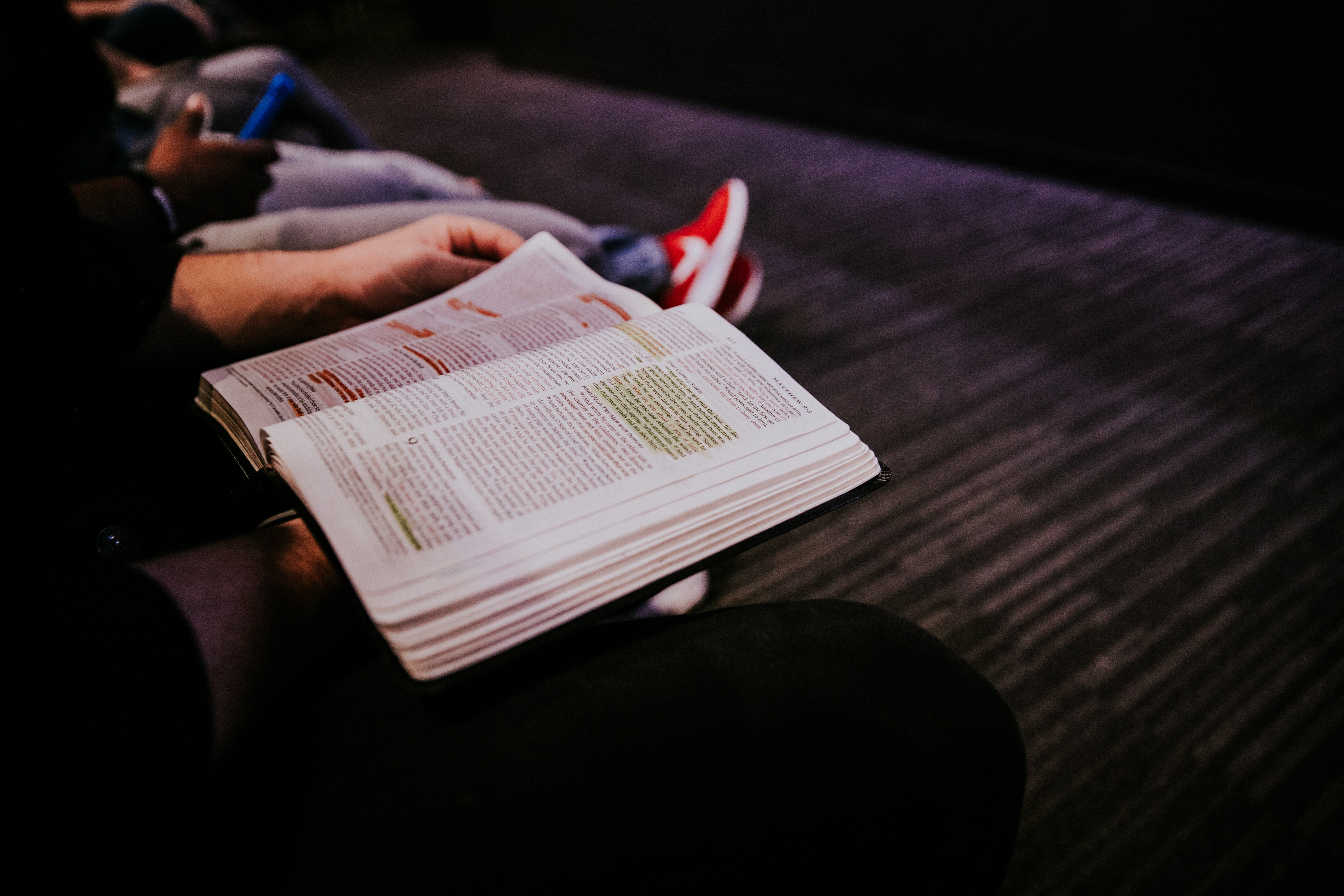
As you look at the verse, what words stick out? Are any words repeated? Look at the context of the verse and passage, specifically looking at the verse prior and following. Is the passage/verse a question, statement, or command? Is the writer describing something or recounting a story or narrative? What did the author see when they wrote the passage? Try to put yourself in their shoes and make some observations. Practically, you can mark anything you observe in your bible or in a journal.
- Interpretation: “What does it mean?”
What do you think the author intends in this passage? This is where you can ask a bunch of questions of the text and where you seek to find answers to those questions. For example, if you studied John 11:35 (“Jesus wept”) you could ask: Why is Jesus crying? What led Him to start crying? Are there any other times Jesus wept? As you study the passage and its context, you put your questions and answers together as you attempt to interpret the verse/passage.
- Application: “How does it work?” or “What do I do?”
Now that we’ve made some observations and made efforts to understand what the Scripture means, we need to figure out what we do with it. How does this passage apply to me? What do I do about it? How will this passage impact my life or the lives of those around me? James 1:22-25 describes a man who looks in the mirror and sees what he looks like and then turns around and forgets what he saw in the mirror. We don’t want to be people who look into God’s Word and forget what it says. Rather, we want to be people who allow God’s Word to change and transform us, so that we might become more and more like Jesus Christ.
Read Psalm 1
Psalm 1
1 Blessed is the one
who does not walk in step with the wicked
or stand in the way that sinners take
or sit in the company of mockers,
2 but whose delight is in the law of the Lord,
and who meditates on his law day and night.
3 That person is like a tree planted by streams of water,
which yields its fruit in season
and whose leaf does not wither—
whatever they do prospers.
4 Not so the wicked!
They are like chaff
that the wind blows away.
5 Therefore the wicked will not stand in the judgment,
nor sinners in the assembly of the righteous.
6 For the Lord watches over the way of the righteous,
but the way of the wicked leads to destruction.
Practice
Quick summary: The first method we’re sharing with you this week is to take three steps with every passage you study.
- Observation: “What does it say?” or ”What do I see?”
- Interpretation: “What does it mean?”
- Application: “How does it work?” or “What do I do?”
What do you observe, interpret, and apply from Psalm 1?